
How to Search the Apple Valley Court Docket
Apple Valley has no standalone municipal-court portal. Every Apple Valley matter that reaches a judge is filed with Dakota County District Court. The docket search runs through Minnesota Court Records Online, known as MCRO. Select Dakota under Court Locations. A service center sits in Apple Valley. That does not mean the city keeps its own separate case database.
The best MCRO query uses a full court case number or the citation number. Searching by name alone gets noisy. So add date filed, case status, category, and a Dakota filter whenever you can. The official instructions allow a wildcard after at least two characters. A Sounds Like option exists too. You just cannot combine the two. Once you open MCRO Case Details, you can view the Register of Actions along with any listed hearing information. Save the exact inputs and the date of any court docket search so you can repeat it later.
- Open MCRO and choose Case Search.
- Select County under Court Locations and check Dakota.
- Enter a complete Apple Valley citation or case number when known.
- Review Case Details, Case Events, and any hearing result.
- Use the court calendar or Court Administration for a current setting confirmation.
Apple Valley Western Service Center
The Dakota County Western Service Center sits in Apple Valley. The address is 14955 Galaxie Avenue West, Apple Valley, Minnesota 55124. The official Dakota court contact page lists 952-247-7099 as the main number. So Apple Valley is a true court-service spot inside the countywide District Court system. It is not a separate Apple Valley municipal court.
One wrinkle is worth knowing. The city's own ticket FAQ also sends traffic-ticket and fine questions to the Western Service Center. Yet it prints 952-891-7570 instead. Trust the court contact page for the court's number. Treat the FAQ as proof of how local ticket matters get routed. Before you drive over for an Apple Valley file, a certified copy, or a public terminal, call the right court division. Confirm the service you need.
The Apple Valley Municipal Court
Apple Valley has its own city agencies. But no dedicated Apple Valley Municipal Court and no independent Apple Valley court docket exists. Dakota County District Court is the trial court that keeps the judicial dockets for the whole county. It covers criminal, traffic, civil, family, probate, juvenile, and other matters. Where a case started does not change which court holds the file.
For police contact, start with the Apple Valley Police Department page. It is a city-agency resource, not a court-records portal. When you need a court docket, a court date, or a certified document, go through MCRO, Dakota Court Administration, the calendar, or the copy-request channel. The city source and the county court each do their own job. They are not the same office.
Note: Apple Valley hosts a county court service center. The city itself runs no separate municipal docket system.
Apple Valley Police and Court Files
Apple Valley Police may be the agency behind a city incident or a citation. Court Administration keeps the judicial side: the register of actions, filed court documents, court settings, judgments, and certified copies. Each office answers a different question. Ask the agency that created a record for a copy of it. A police report or city-held record goes to the police. A court order, court docket, or case event belongs to Dakota County District Court. The official Apple Valley police page shows what the municipal agency offers. It also shows where its role ends.
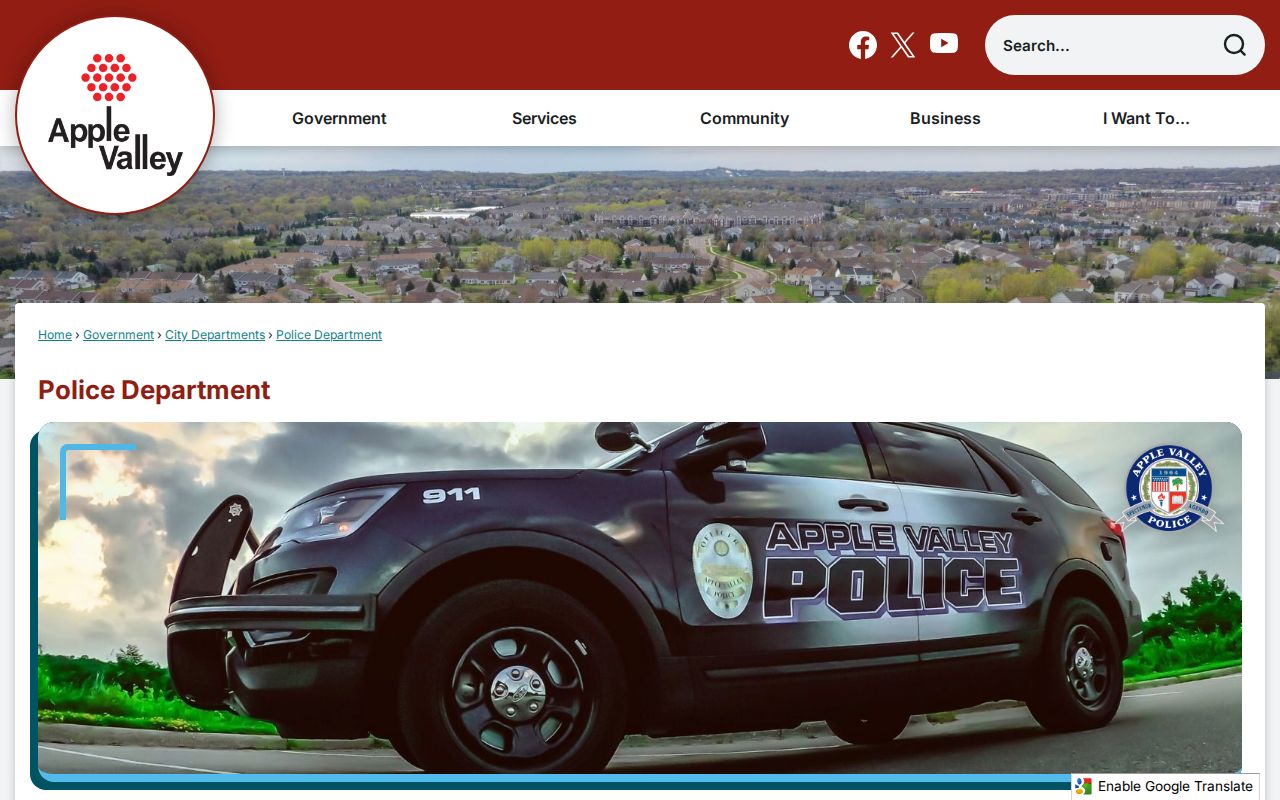
Apple Valley keeps two records apart, and it helps to know which is which. The police source points to the city agency that handled the incident. The judicial docket lives elsewhere, with Dakota County District Court.
That split matters. A call to the Apple Valley police is not proof that anything was ever filed in court. It also says nothing about an outcome. A judicial case runs on its own clock. It has its own access rules and its own record fields.
Apple Valley Court Dates and Settings
Apple Valley hearings sit on the Dakota County court calendar, not on one of their own. The city posts no separate calendar. Two official tools carry the settings: the MCRO Hearing Search and the county's daily PDF. The Dakota public calendar page holds the PDF link.
Hearing Search is flexible. You can query it by person or business name. A full case number, judicial officer, attorney, or a hearing-date range also works.
The PDF shows selected public settings. Each line can list the hearing location, date, time, judicial officer, hearing type, connection type, and case number. It goes up around 7:00 p.m. for the next court day. It then refreshes hourly starting at 7:00 a.m. on business days.
Treat both as snapshots, not verdicts. Restricted matters may be left out, and settings can shift. If you must appear, confirm your Apple Valley hearing with Court Administration first.
| Date | The published Dakota County District Court setting date. |
|---|---|
| Time | The listed time, which can change through court action. |
| Location | The assigned court location, including a listed service-center setting where applicable. |
| Hearing type | The proceeding label, such as arraignment, motion, or trial. |
| Connection type | The field for the stated hearing connection mode. |
Apple Valley Citation Context
Why does an Apple Valley neighbor hold a city citation in the first place? The city's own budget book helps explain the volume. The 2021 adopted budget counted 471 Special Enforcement Team citations in 2021. That was down from 466 in 2020. Bigger totals came before that: 935 in 2019, 793 in 2018, 933 in 2017, 848 in 2016, and 746 in 2015. Those are city enforcement counts. They are not Dakota court filings. They say nothing about outcomes or convictions.
A citation is one thing; a court docket is another. The real judicial record lives in MCRO and the Dakota County court channels. It does not live in a budget table. A police report, a citation, and a court docket each carry their own meaning. None of them can stand in for the others. For routing, the official Apple Valley ticket FAQ and the Dakota court divisions page show how the city handoff to District Court works.
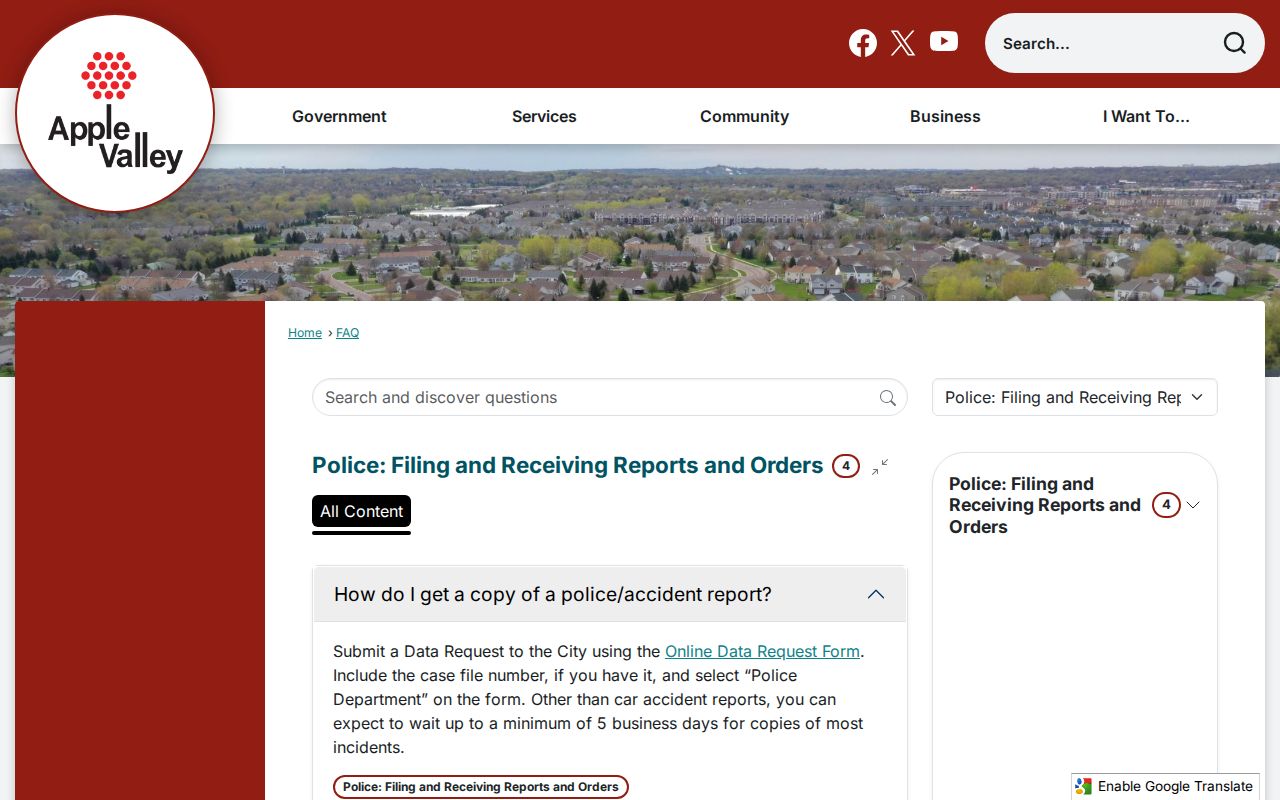
The Apple Valley FAQ points ticket questions toward the county court route. There is no separate Apple Valley court docket to search instead.
Apple Valley Traffic Tickets
Once an Apple Valley traffic ticket moves into court, the search runs through MCRO. It uses a citation number or case number. The case number is assigned after the citation is filed with the court. Some payable citations also show an Appear By field in Case Details. The FAQ helps with local routing. Payment, contest, and hearing instructions come from District Court and the Minnesota Court Payment Center.
The state Pay a Fine page lists every channel: online, phone, mail, and in person. Pay attention to one rule. Paying a traffic fine counts as a guilty plea and conviction under the official traffic guidance. Anyone who wants to fight an Apple Valley citation should follow the court's own process. The court record shows the case events and any disposition. A city budget statistic does not. For countywide coverage, see Dakota County traffic court records.
Apple Valley Service Center Access
Apple Valley doubles as a key county access point thanks to the Western Service Center. The court's three-location model includes two more sites. It covers the Dakota County Judicial Center in Hastings and the Northern Service Center in West St. Paul. Before visiting for a restricted file, a paper-only record, or a certified copy, call ahead. Courthouse public terminals can show more public records than remote MCRO does.
The counter route earns its keep. That happens when a case search shows an event but no viewable document. Court Administration can tell you whether a document is restricted. Some records sit outside remote coverage. The office can also explain lawful counter or copy-request access. Repeating the same online search will not unlock a document that Rule 8 keeps out of the remote system.
- Case Details
- The MCRO Register of Actions view with case summary and event history.
- Case Event
- A dated docket activity, filing description, or court action.
- Certified Copy
- A court copy bearing the certification or seal, subject to the applicable fee.
Where Apple Valley Cases End Up
Apple Valley matters land in Dakota County District Court once the city citation stage ends. The court's divisions cover Criminal and Traffic, Civil and Conciliation, Family, Probate and Mental Health, Juvenile, Guardianship and Conservatorship, and treatment courts. Apple Valley supplies the local and geographic context. The judicial docket lives at the Dakota County level.
Docket flow: Apple Valley city agency or citation origin › Dakota County District Court › Minnesota Court of Appeals for an eligible state appeal.
A conciliation case can later become a separate District Court civil file through trial de novo removal. Federal matters sit in a federal system, not MCRO. For the full picture of the unified court structure and other county locations, see the Dakota County court docket overview.
Apple Valley MCRO Case Details
MCRO Case Details is the public Register of Actions view. It covers any Apple Valley-related Dakota case. One screen can carry a lot: case number, title, type, date filed, venue, judicial officer, status, citation number, party roles, attorneys, related cases, hearings, events, documents, financial information, and judgments. Seeing an event listed does not guarantee the document image is available remotely.
MCRO splits its tools across Case Search, Document Search, Hearing Search, and Judgment Search. Document Search needs a complete case number. Hearing Search finds court settings. Judgment Search covers only docketed money judgments and satisfactions. Read with care. An Apple Valley charge, warrant, status, or scheduled hearing is not a final outcome. That status holds until you review the actual court event or disposition.
Public Access to Apple Valley Court Records
Apple Valley court records are judicial records. The Minnesota Judicial Branch public-access rules govern them. MCRO is one channel among several. Courthouse terminals, court counters, mailed requests, and Court Administration round out the documented routes. The Judicial Branch copy process handles plain, certified, and restricted-record requests. A city data request is separate from a court file request. The official copy-request page spells out the court routes. A requester should name the Dakota County file, the document, the date, the copy type, contact information, and payment details. Check the Dakota fee table for current amounts before mailing a certified or exemplified request.
Key rules:
Minnesota Rules of Public Access, Rule 4 sets the general framework for public judicial records.
Rule 8 limits remote access to specified records and case types.
Minnesota Statutes section 13.03 concerns executive-branch data, including some city-held material, not sealed court files.
Apple Valley Restricted Records
Not every Apple Valley case file is open to the public. A search can surface the case itself while hiding certain documents. A record may be confidential, sealed, or viewable only inside the courthouse. Family, juvenile, and adoption files come with their own stricter rules. The daily calendar is deliberately incomplete too. So if an Apple Valley matter fails to appear in that PDF, do not assume much. The case or hearing may still exist. For anything beyond public view, use the lawful channels the court provides. Court Administration can route a copy request or walk you through the correct access procedure. A confidential-information form shields restricted identifiers. But it will not unseal a case. Apple Valley residents should also keep three things distinct. These are city enforcement statistics, city police information, and the actual court record. Blurring them makes a partial online result look like more than it is.
Apple Valley Court Search Path
Apple Valley has useful local court services. But real Apple Valley court research runs through the county channels. Match the task to the tool. A citation search belongs in MCRO with Dakota County selected. A court date belongs in Hearing Search or on the daily calendar. When you need an actual court document, a public terminal or Court Administration may be the only route. And an Apple Valley police contact question goes to the local agency, not to the court docket. The Western Service Center serves Apple Valley residents well. It works best once the right division has confirmed what you actually need. Traffic questions can start with the city FAQ. From there, move to the Court Payment Center or District Court. Remember that a case result may show public events while the documents stay limited remotely. Search accuracy improves a lot. You just need to know both the record type and the court case number.
Apple Valley Court Search Check
Three details pick the right Dakota County channel. They are an Apple Valley citation, an Apple Valley court date, and an Apple Valley case number. Local information tells you where the matter began. MCRO for Dakota, the calendar, and Court Administration then hold the judicial record itself. The service-center route helps only after the court need is clear. Match the detail to the channel first.