
How to Search Dakota County Civil Dockets
Minnesota Court Records Online, or MCRO, is the public entry point for Dakota civil records. Its Case Search takes a party or business name, an attorney name or bar number, and a complete case number. Several narrowing filters are available too. Set Court Locations to County and check Dakota first. Then use the case category, status, or date-filed options. When the party is an organization, search by business name rather than by a person. A complete case number narrows results best. With only a name, note the spelling and filters you used. Check the case type and court location before opening Case Details. That view is the Register of Actions. It is a public case summary with an event history. It is not a certified court record. Nor does it promise that every filed document can be viewed online.
- Open MCRO Case Search and limit Court Locations to Dakota County.
- Use a complete case number, party name, or business name with available filters.
- Open the relevant Case Details entry and confirm the case type, venue, and filing date.
- Read Case Events, hearings, and related cases before drawing any conclusion about the file.
- Contact Court Administration for a copy, certification, paper file, or access question.
Dakota County Civil Docket Filters
MCRO splits its tools into Case Search, Document Search, Hearing Search, and Judgment Search. Document Search needs a complete case number and lists documents newest first. Hearing Search accepts a party, complete case number, judicial officer, attorney, hearing date, and category. The Dakota location works there as well. Judgment Search is built around debtor names. It cannot replace a broad civil case search or a certified judgment request.
| Question | MCRO route | What it can show |
|---|---|---|
| Which civil file is it? | Case Search | Case card and Case Details |
| Was a hearing set? | Hearing Search | Date, type, and route to case details |
| Which documents are public online? | Document Search | Document list after a complete case number |
| Is there a docketed money judgment? | Judgment Search | Judgment details and satisfactions |
Each tab on a Dakota County civil docket search answers a different question. A filing date marks when the case began. An event date marks something that happened in the file, and a hearing date marks when the court scheduled a matter. Mixing them up will bury the docket entry you want.
Dakota County Civil Administration
Court Administration for the Dakota County District Court is where the civil docket actually lives. The office keeps the court file, the Register of Actions, and the calendar. It handles requests for copies and certification. Its official divisions page splits Civil/Conciliation from Family. Family Motion in District Court dates run through the civil and family line. Still, a family record may face remote-access limits that an ordinary civil document does not.
Civil and Conciliation
Use the Dakota civil line for civil docket, conciliation, copy, and court-date questions.
651-377-7900
Dakota County court divisions provide current routing for Civil/Conciliation and Family.
Going online is only one way in. The Judicial Branch also puts public terminals inside each courthouse, and counter staff can pull locally stored paper records for you on request. Dakota County keeps three official locations: the Judicial Center in Hastings, the Western Service Center in Apple Valley, and the Northern Service Center in West St. Paul. Call the division first if your file is paper, archived, sealed, or restricted. That one call can save you a trip.
What a Civil Docket Shows
A Case Details record for a Dakota civil case can carry a lot: the case title and type, filing date, venue, judicial officer, status, party roles, attorneys, Case Events, documents, hearings, dispositions, judgments, financial information, and related cases. Think of the docket as an index and a running history. It does not tell you who is right. One event in the list is a record of something filed or scheduled, not necessarily a decision on the merits of the dispute.
| Case information | File number, type, filing date, venue, status, and judicial officer. |
|---|---|
| Case Events | Dated filing, motion, notice, order, disposition, or payment activity. |
| Documents | Available links or index entries, subject to date, case type, confidentiality, sealing, and Rule 8. |
| Hearings | Scheduled settings with date, time, location, and type. |
| Judgment details | Money-award information and a later satisfaction where docketed. |
A motion is a request. An order is the court actually acting on it. They are not the same thing, even when the labels look similar. A settlement, a stipulated dismissal, and a judgment all mean something different in procedure too. So open the event history. Check whether each item was filed by a party or generated by the court before you trust the label.
Dakota County Civil Conciliation Removal
Minnesota handles lower-dollar civil claims through conciliation court. It is a small claims track inside the District Court structure. Do not assume the file stays small. A conciliation docket can hold a judgment, a transcript, and later a removal to a higher court. Under Rule 521 of the Minnesota General Rules of Practice, a party who loses after a contested conciliation trial has 21 days after notice of judgment to remove the case. The removal goes for a trial de novo in District Court.
That removal opens a brand-new civil file. Expect the District Court filing fee, and a jury fee if one is requested. This is why a docket search can turn up two similar MCRO records for one dispute. One is the original conciliation file. The other is the later civil file. Write down both case numbers. Read the newer register on its own, because it did not replace the original history; it sits beside it.
For the wider appeal route from conciliation and District Court, the Minnesota Judicial Branch appeals page lays out the official steps. Rule 521 governs the specific removal framework for a new trial.
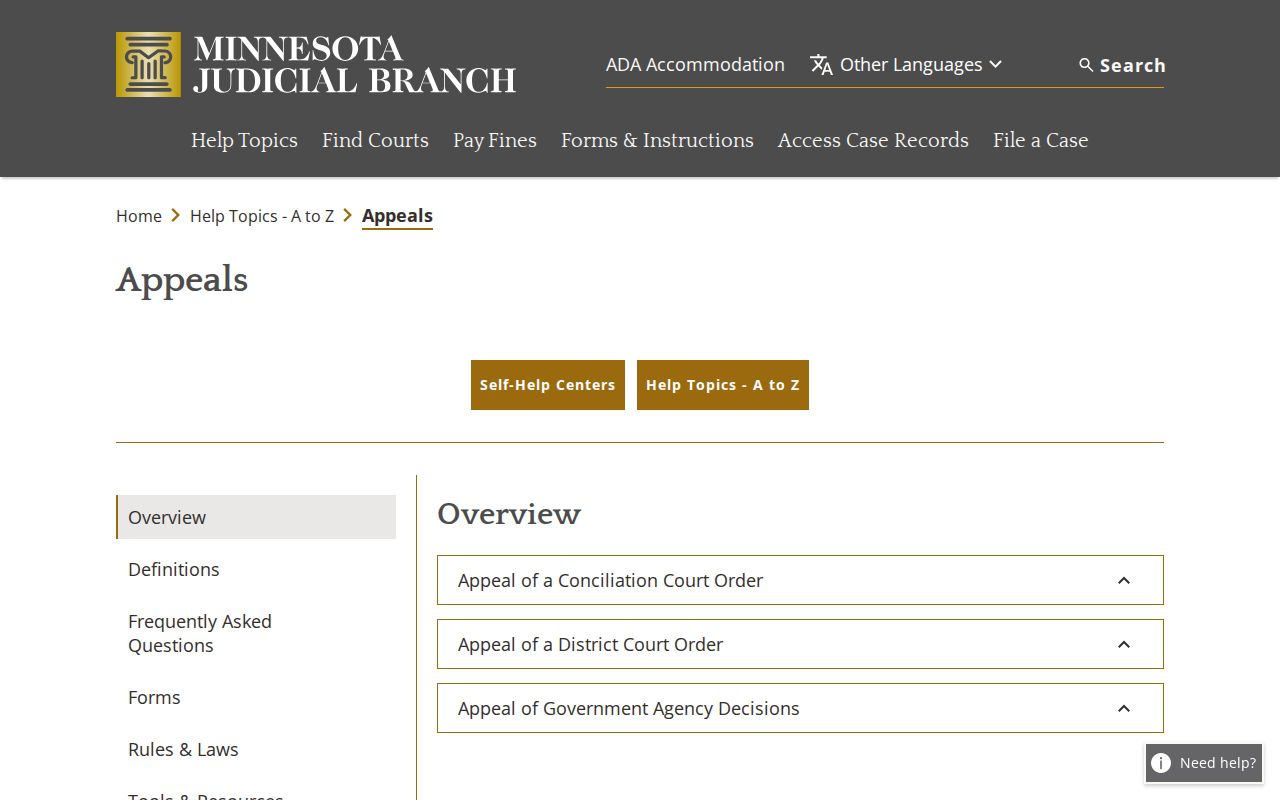
One caution about the appeal route: it does not make the First Judicial District administrative office a second trial docket. Dakota County civil files stay District Court records, wherever the paperwork travels.
Dakota County Civil Event Meanings
Civil status labels cover a lot of ground. An open or closed tag on a Dakota County court docket will not tell you what happened with each motion, hearing, judgment, payment, or satisfaction inside the file. The practical move is to line up the date, the event description, the document index number, and everything filed afterward. A calendar entry only proves a hearing was scheduled. An order entered later in the history answers what actually occurred.
- Filing
- A document or request entered into the court record, not necessarily a ruling.
- Motion
- A request for court action that may lead to a hearing, order, or denial.
- Disposition
- The recorded resolution of a claim or case event.
- Judgment
- A court-entered determination or monetary award.
- Satisfaction
- A docketed indication that a judgment obligation was paid or otherwise satisfied.
Each event on a Dakota County civil docket can carry a View Document link. Whether that link appears depends on access rules, not on the court file itself. So a missing link does not mean the document is absent from the case record; use Document Search to check the public file.
Types of Civil Cases on the Docket
Civil dockets in Dakota District Court cover a wide mix. You will see contract disputes, tort claims, property matters, consumer cases, and judgments. Conciliation cases sit inside that same District Court structure. Family cases get their own listing and separate access rules. Probate, mental health, adoptions, guardianship, juvenile, and treatment court run as distinct divisions, each with its own docket and privacy limits. All use the county District Court framework.
When you search MCRO, the case category and court location fields help sort out similar names and related matters. They also keep a civil case lookup from being confused with a police, county-attorney, or city record search. Court Administration holds the judicial file. If you need the report that started a case, the originating agency may be the better office to ask.
Dakota County Civil Document Access
Remote access has a starting line. Under MCRO guidance, major and minor civil documents filed on or after July 1, 2015 are generally available online. Access is still subject to confidentiality, sealing, and Rule 8. That date is a coverage rule, not a promise. Older material has thinner remote coverage. Even public documents may still need a courthouse terminal or an allowed copy request.
For the fullest public electronic access, use a courthouse terminal. For locally stored paper records, go to the counter. A party in an existing case can eFile a copy request when permitted. Mail requests follow the official copy-request process. Minnesota eFile and eServe serves authorized filers. It is a filing and service system, not a public docket viewer. One more caution: a court file follows Judicial Branch public-access rules. An executive-branch Minnesota Data Practices Act request will not replace the court-copy process.
Settings and Hearings on Civil Dockets
A civil hearing can take many forms. Conciliation hearings, eviction hearings, motion hearings, court trials, jury trials, and other case-management settings all appear on civil dockets. The daily Dakota calendar helps with short-term scheduling, but it is not a complete case history. A listed date tells you nothing about every filing, order, judgment, or later payment in the file.
Start with MCRO Hearing Search for a future or historical setting. When the date is near, check it against the official Dakota daily calendar. Read each field on its own: Hearing Location, date, time, judicial officer, hearing type, connection type, and case number. Courtroom assignments and remote instructions can change.
Dakota County Civil Eviction Calendar
Eviction Hearing is one of the public labels Dakota's daily calendar uses. That label does not turn the PDF into a complete eviction database. Current case status, judgment, writ, later motions, payment, or satisfaction may require Case Details or the relevant public document. Some questions call for Court Administration. The calendar can leave out confidential or non-remotely accessible matters. Entries may also change during the day.
Calendar check: A civil setting means a hearing was scheduled. Confirm later events before treating it as a court outcome.
Use court records to understand the public case process or to resolve a specific matter. A docket label cannot establish someone's current circumstances. Do not draw conclusions beyond what the judicial record actually shows.
Public Access to Civil Dockets
Rule 4 of the Minnesota Rules of Public Access to Records of the Judicial Branch sets the framework for public judicial records. Rule 8 governs the remote-access exceptions. A single public case can mix remotely available events, terminal-only records, restricted documents, and confidential or sealed material. Family and post-adjudication paternity cases have especially limited remote-document coverage under MCRO guidance.
When a document is unavailable, the next step is the courthouse terminal or Court Administration. A permitted copy request is another option. A confidential-information form protects restricted identifiers in a filing. Filing one does not create an automatic right to see a sealed record. Adoption records follow their own access process.
Access rule: Minnesota Rules of Public Access, Rules 4 and 8 govern court-record categories and remote limits.
Dakota County Civil Certified Judgments
An online printout is not a certified judgment. For a court-certified copy, go through Court Administration. The Judicial Branch copy process separates plain, certified, and exemplified copies. Dakota's current fee page lists a generally free uncertified instrument, printout, scan, or screen print; a certified copy at $14 per document; an exemplified copy at $14; and exemplified plus certified at $28. Fees can change, so confirm them before you pay.
| Copy type | Dakota fee listing | Use |
|---|---|---|
| Uncertified | $0 | Public instrument, printout, scan, or screen print |
| Certified | $14 per document | Court certification or seal requested |
| Exemplified | $14, or $28 with certification | Additional court authentication |
The fee schedule rests on Minnesota Statutes section 357.021, which sets out the filing amounts the district court charges.
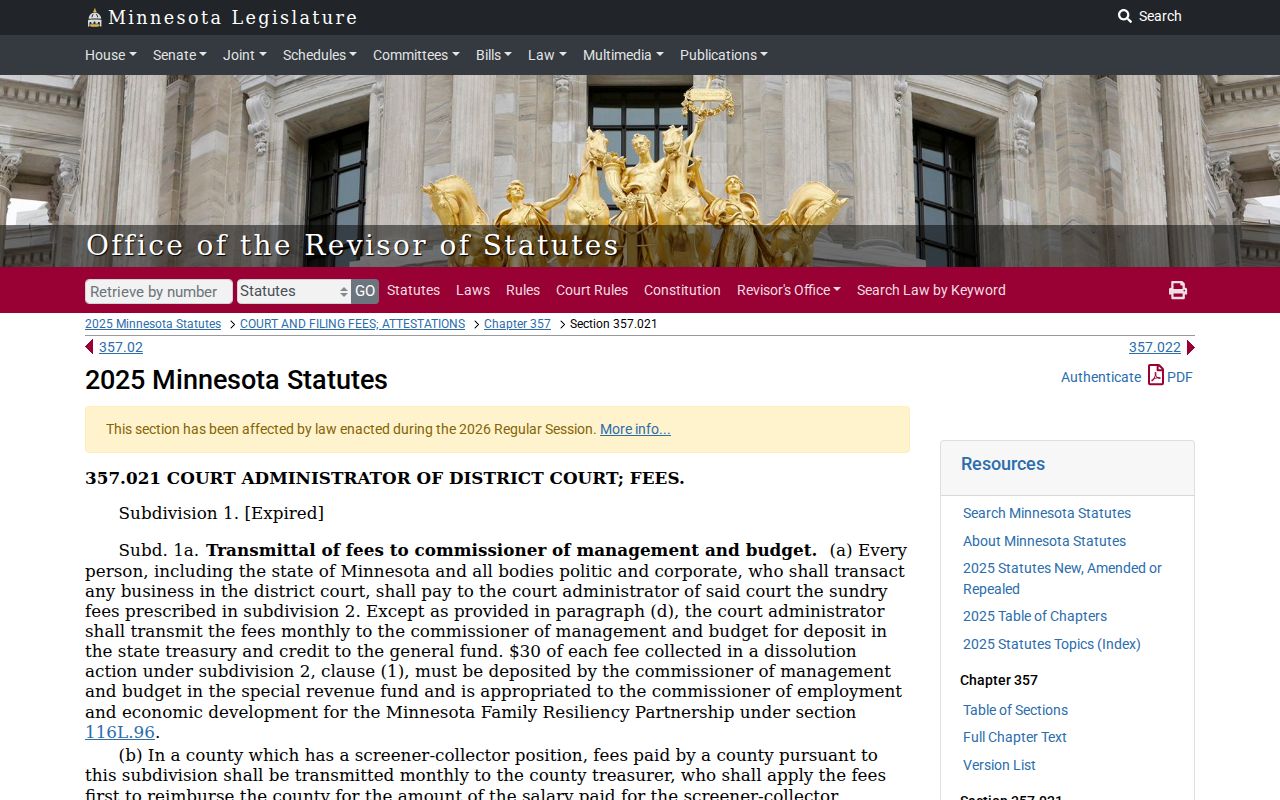
For Dakota civil copies, use the court's current fee and contact information. A saved online screen is not a reliable substitute.